Complete Nutrition Guide
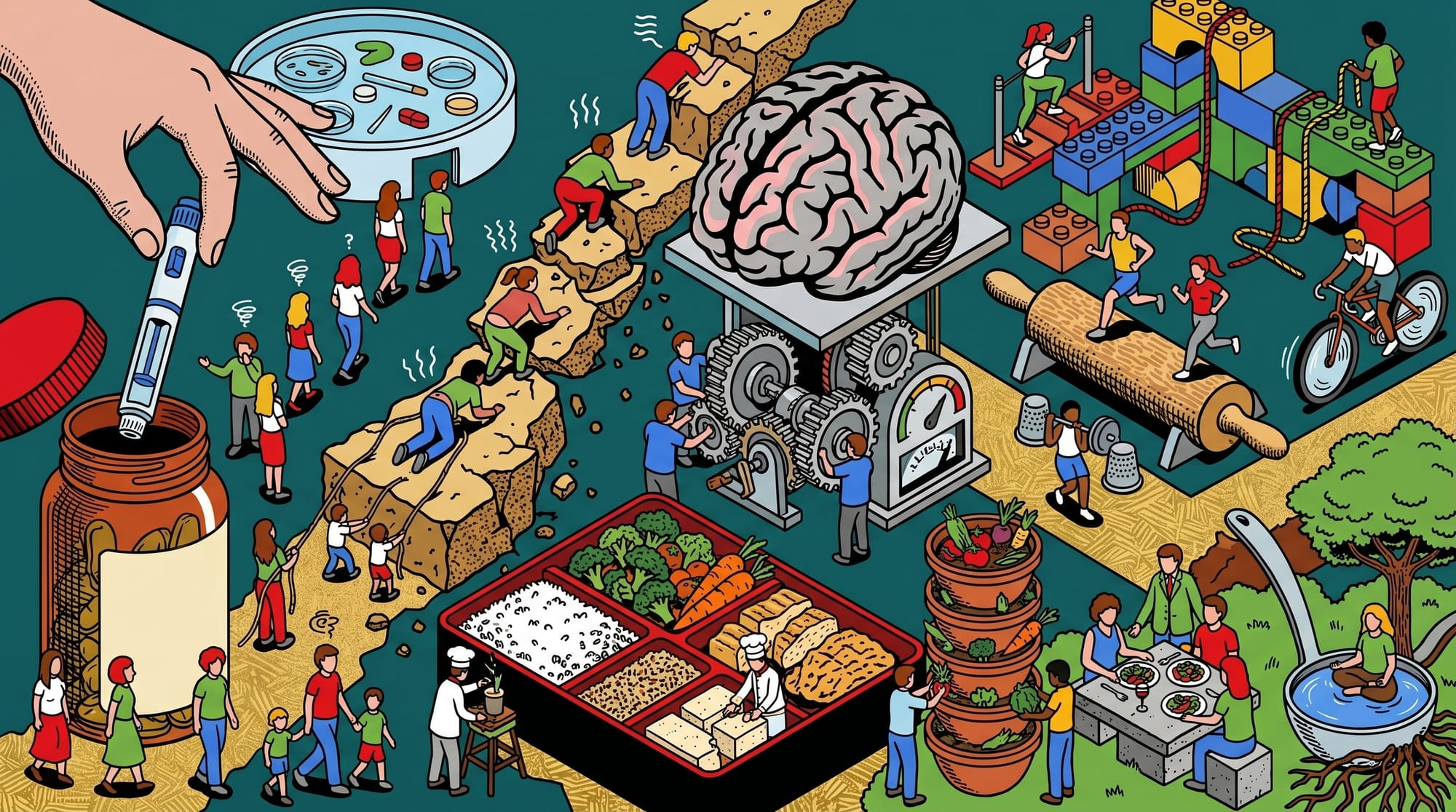
You've probably tried this before. Cut carbs, tracked calories, started fresh on Monday. It worked for a while, then it didn't. This guide isn't another attempt at the same approach. It's an explanation of why your body behaves the way it does — and what to do about it.
Why Eating Well Is Harder Than It Sounds
-
1.1 — The Willpower Myth: Why Discipline Is the Wrong Diagnosis
Most people believe they fail at diets because they lack self-control. This chapter shows why that belief is scientifically incorrect — and replaces blame with a more accurate, useful model.
-
1.2 — The Food Industry's Business Model Depends on You Eating More
How ultra-processed foods are engineered through fat-salt-sugar combinations, texture, and aroma to override your natural fullness signals. The science of hyper-palatability — and why it's not an accident.
-
1.3 — How Marketing Sells You the Problem and the Solution Simultaneously
Diet culture, health-washing, the $200B weight loss industry, and how advertising creates body anxiety and then monetizes it. Why most of what looks like nutrition advice is actually a sales funnel.
-
1.4 — Modern Life Is Structurally Incompatible with Traditional Dietary Advice
Why advice like "cook fresh meals daily" collides with shift work, long commutes, decision fatigue, and the mental load of modern life. The gap between nutritional ideal and real-world constraint.
-
1.5 — Fragmented Information Creates the Illusion of Knowledge
Why collecting tips from reels, podcasts, and Instagram stories produces confident ignorance rather than understanding. The difference between knowing facts and having a framework — and what this guide gives you instead.
How Your Body Works with Food
-
2.1 — What Is Energy, Really? Calories Explained
Why a calorie is a unit of energy, not a nutrient — and why this distinction changes how you think about food.
-
2.2 — How the Body Burns Energy: Metabolism Demystified
Basal metabolic rate, NEAT, exercise, and the thermic effect of food — the four real components of how much you burn each day.
-
2.3 — What Happens When You Eat More Than You Need
How the body stores excess energy as fat, glycogen, or muscle — and under what conditions each happens.
-
2.4 — What Happens When You Eat Less Than You Need
The science of a caloric deficit: fat loss, muscle preservation, and the adaptive responses you need to know about.
-
2.5 — Hunger vs. Appetite: Why Willpower Alone Doesn't Work
The hormonal signals (leptin, ghrelin, insulin) behind hunger — and why some eating environments make overeating almost inevitable.
Your Personal Numbers
-
3.1 — What Is BMI, What It Tells You, and What It Doesn't
Why BMI is a population-level screening tool, not a personal health verdict, and what to pair it with for a fuller picture.
-
3.2 — How Many Calories Do You Actually Need?
Calculating your TDEE based on age, weight, height, and activity level — and setting a realistic deficit or maintenance target.
-
3.3 — How Much Protein Do You Need to Preserve Muscle?
The science-backed range for protein intake during weight loss — and how to adjust it based on your body weight and goals.
-
3.4 — Setting Your Macros: Protein, Fats, and Carbohydrates
Once your calorie target is set — how to divide it into macronutrients in a way that supports your specific goal: fat loss, maintenance, or body composition.
The Three Macronutrients
-
4.1 — Protein: What It Is, What It Does, Where to Find It
Why protein is the most important macro for body composition — its role in muscle repair, satiety, and the thermic effect of eating.
-
4.2 — Carbohydrates: Energy, Fiber, and the Glycemic Question
Simple vs. complex carbs, what dietary fiber actually does, blood sugar spikes, and why cutting carbs entirely is rarely necessary.
-
4.3 — Fats: The Essential, the Neutral, and the Harmful
Saturated, unsaturated, and trans fats — which ones support health, which are neutral in moderation, and which to genuinely minimize.
-
4.4 — Reading a Nutrition Label Without Confusion
A practical walkthrough of what every number on a food package actually means — serving sizes, percent daily values, and hidden sugar tricks.
-
4.5 — Ultra-Processed Food: Why It's Different, Not Just "Unhealthy"
The NOVA classification, what makes ultra-processed food uniquely problematic for appetite regulation, and how to identify it on a shelf.
-
4.6 — Alcohol: Calories, Metabolism Disruption, and the Real Trade-Off
How the body prioritizes alcohol as fuel, its effect on fat metabolism, sleep, and appetite — and how to account for it honestly.
Eating in Practice
-
5.1 — Building a Meal That Keeps You Full: The Satiety Formula
How protein, fiber, water content, and food volume interact to produce lasting satiety — and how to build meals around these levers instead of willpower.
-
5.2 — Meal Timing: What Actually Matters and What Doesn't
The truth about eating after 6 PM, skipping breakfast, intermittent fasting, and meal frequency — separating evidence from habit.
-
5.3 — Grocery Shopping with a Purpose
A framework for choosing foods at the store: what to prioritize, what to limit, and how to build a default pantry that makes healthy defaults easy.
-
5.4 — Eating Out Without Derailing Your Goals
Practical strategies for restaurants, social meals, and travel — without anxiety or strict rules.
-
5.5 — Tracking Food: When It Helps, When It Hurts
How to use calorie and macro tracking as a temporary awareness tool — not a permanent obsession — and when to stop tracking entirely.
Common Myths and Why They Persist
-
6.1 — Detoxes, Cleanses, and the Liver You Already Have
Why "detox" diets have no physiological basis — and what the liver, kidneys, and lymphatic system already do for free.
-
6.2 — Metabolism Boosters, Fat Burners, and Supplements That Don't Work
A brief, evidence-based tour of the most common supplement claims — and the short list of what has actual research behind it.
-
6.3 — "Good Foods" and "Bad Foods": Why This Framing Fails You
Why classifying foods as morally good or bad leads to guilt cycles, restriction-bingeing patterns, and a broken relationship with eating.
-
6.4 — Low-Fat, Low-Carb, Keto, Carnivore: What the Science Actually Shows
A neutral comparison of popular dietary frameworks: what each achieves, what it sacrifices, and whether any is objectively superior for fat loss.
-
6.5 — Why Diets "Work" at First and Then Stop
Metabolic adaptation, water weight fluctuations, adherence decay, and the real reason most diets fail — not your character, but the design.
After GLP-1: Maintaining Weight Without Medication
-
7.1 — What GLP-1 Medications Actually Do — and Stop Doing When You Quit
How semaglutide and tirzepatide suppress appetite hormonally — and what changes in your body when you discontinue them.
-
7.2 — Why Weight Regain Happens — and How to Prevent It
The evidence on post-GLP-1 weight trajectories and the behavioral and nutritional strategies that predict who maintains their results.
-
7.3 — Rebuilding Hunger Regulation Naturally
How to reconstruct appetite awareness, fullness cues, and food relationship after a period of medically suppressed hunger.
-
7.4 — A Nutrition Framework for Long-Term Weight Maintenance
Applying all sections of this guide to a practical maintenance approach — calorie targets, protein floors, and the habits that predict lasting success.
Building Habits That Last
-
8.1 — The Environment Is the Diet: Setting Up Your Kitchen and Routine
How your physical environment — what's visible, accessible, and default — shapes your food choices more than knowledge or motivation does.
-
8.2 — Sleep, Stress, and Nutrition: The Triad You Can't Ignore
How poor sleep elevates ghrelin and cortisol, why chronic stress drives overeating, and what to do about both from a nutritional standpoint.
-
8.3 — Hydration: The Actual Guidelines and Common Misconceptions
How much water you actually need, how to tell if you're hydrated, and why thirst is a reliable guide for most healthy people.
-
8.4 — Progress Without Obsession: A Long-Term Mindset for Healthy Eating
How to measure progress realistically, navigate setbacks without spiraling, and move from "dieting" to simply knowing how to eat.
Register for free and join FoodGuide.pro members
- Access to members-only posts
- No spam ever, we promise
- Weekly email newsletter
- Join 1,000+ happy members